




Home News Page 8

Contrôle Routier Québec Officer Denounces Systemic Failures

0
Close-up of a Contrôle routier Québec officer’s uniform sleeve showing the official badge logo, symbolizing authority and road safety enforcement in the commercial transport sector.

For over three months, Contrôle routier Québec officers—Quebec’s designated peace officers for enforcing road safety regulations in the commercial transport sector—have been removed from patrol duties following a landmark ruling by the Administrative Labour Tribunal (TAT). Now restricted to fixed checkpoints, these officers can no longer fulfill the majority of their mandate.

An anonymous open letter, signed by a member of the Fraternité des constables du contrôle routier du Québec (FCCRQ), was sent to us along with supporting documents. It denounces a critical situation with serious consequences for public safety, the transportation industry, and governance.

“As Contrôle routier Québec officers, we have completely lost confidence in our leadership, particularly those tied to the SAAQ. This breakdown of trust was so profound that, within weeks of the TAT ruling, our union—the FCCRQ—formally requested that Contrôle routier Québec be placed under trusteeship, addressing this directly to Minister Guilbault. This exceptional move, prompted by a blatant failure of governance, remains unanswered, highlighting the lack of consideration given to a major public safety crisis.”

“This letter aims to alert both the public and decision-makers to the urgency of resolving a crisis that jeopardizes not only our safety, but that of all Quebec road users and the integrity of our critical infrastructure.”

Crisis in Governance: SAAQclic, Trusteeship and Ministerial Silence

The letter draws a direct link between the failure of the SAAQclic system and the current crisis facing Contrôle routier Québec officers. Originally intended to modernize services, the digital system caused internal chaos, cost overruns, and a collapse of trust—both among staff and the general public.

For many, the SAAQ has become a symbol of disconnected, opaque management, damaging the credibility of those tasked with enforcing authority on the ground. In this climate, Contrôle routier Québec officers struggle to carry out their duties while being attached to a public institution whose image has been deeply tarnished.

Meanwhile, the SAAQ has chosen to challenge the TAT ruling in court instead of addressing the concerns outlined in the judgment. The Tribunal had concluded that controllers faced real dangers while on duty, citing 27 violations related to occupational health and safety—from inadequate equipment to the inability to protect their physical and mental wellbeing. Judge Danielle Tremblay ordered the immediate cessation of these dangerous conditions. Yet the SAAQ opted for legal battles over preventative action, leaving thousands of kilometers of roads without mobile enforcement.

This decision has only deepened the perception among many officers that their employer refuses to listen to its own personnel and disregards their safety. The situation raises broader questions about whether Contrôle routier Québec should be managed by a different ministry, one better equipped to oversee a peace officer corps rather than an overloaded and dysfunctional administrative agency.

Peace Officers Without Weapons: A Misunderstood Role

Contrôle routier Québec officers are recognized peace officers and special constables under their official mandate. They are empowered to act not only under the Highway Safety Code but also the Criminal Code, dealing with impaired driving, theft, and drug transport. Their 21-week training at the École nationale de police covers both road enforcement and criminal investigations.

“Over the years, our role has evolved significantly. As Mr. Daignault noted, ‘We deal with criminal matters, drug trafficking, stolen vehicles. The work environment has shifted dramatically over the past 10 years.'”

Despite their expanded duties and police-level training, these officers work with minimal tools—a baton and pepper spray—leaving them exposed to risks typically faced by armed police. At the same time, SAAQ’s failings and legal choices have increased public confusion. Controllers are increasingly perceived as mere ticket issuers or disgruntled union members, a stark contrast to their true mission of public safety.

“Carrying appropriate defensive equipment is not an excessive demand; it’s a necessity dictated by the evolving nature of our work and our legal duty to intervene in criminal acts. As the TAT recognized, our intervention techniques assume access to tools fit for critical incidents.”

“Integration into the Ministry of Public Security would fully acknowledge the nature of our work, which aligns far more with public safety than administrative transport management. This demand echoes Recommendation 94 of the Police Reality Advisory Committee, mandated by Minister Guilbault.”

“These concerns are shared by many organizations, including the FTQ, and transportation industry associations such as the ACQ and ANCAI, who all recognize our vital role in ensuring public safety.”

What Contrôle routier Québec No Longer Monitors

Since Contrôle routier Québec officers were pulled from patrol, several types of vehicles are no longer subject to oversight. School buses, coaches, taxis, Uber vehicles, and heavy machinery like tractors and excavators now go unchecked.

School zones and construction sites, previously monitored with speed radar by these officers, are now left without coverage, posing direct risks to children and road workers.

Critical infrastructure is also at risk. Without mobile inspections, overweight trucks are circulating unchecked, potentially damaging already vulnerable roads, bridges, and tunnels. The Louis-Hippolyte-La Fontaine Tunnel, the Île-aux-Tourtes Bridge, and many regional secondary roads are particularly exposed. According to the letter, the absence of enforcement accelerates premature infrastructure decay. One single overweight truck, it notes, can inflict as much damage as thousands of compliant vehicles.

The trucking industry has not been spared. With no mobile enforcement, trucks avoiding weigh stations face little risk. Yet many may be operating with major mechanical issues, underqualified drivers, or even illicit cargo. While police can intervene, Contrôle routier Québec officers are specifically trained and mandated for these inspections.

A Call to Immediate Action

“Contrôle routier Québec officers deserve to be treated with the respect due to their status as peace officers and special constables, and to be equipped with the tools needed to carry out their mission safely.”

“Therefore, I call upon:

The Government of Quebec to accelerate the implementation of real solutions to allow the safe return of road controllers to patrol duties;

The Ministers of Transport and Public Security to take a public stance on the future of Contrôle routier Québec and to act on the Police Reality Advisory Committee’s recommendation regarding their status;

The SAAQ to acknowledge the legitimacy of the safety concerns raised by Contrôle routier Québec officers and to cooperate in resolving the situation rather than pursue legal challenges to the TAT ruling;

Municipalities to pressure the government to restore patrol coverage and the specialized services they regularly relied upon;

Media organizations to pay close attention to this critical issue, which affects the safety of all road users.”

This anonymous letter echoes widespread concerns in the road transport industry. The lack of oversight, confusion over Contrôle routier Québec’s mandate, and broader issues of governance all raise serious questions about the current state of road safety in Quebec. Without a clear response from authorities, some fear the situation will continue to deteriorate—until a serious incident once again forces us to confront the consequences of a broken system.

Note : The quotations included in this article were translated from French to English to the best of our understanding and with the utmost care to preserve their original meaning.

Read More : 

No Patrolling by Contrôle Routier Québec’s Agents on Highways Until 2026?

Trial of Steeve Gagnon: “You want to piss me off? Your kids are dead”

0
Steeve Gagnon, former truck driver, charged with the March 2023 ramming attack in Amqui.

The trial of Steeve Gagnon, accused of the fatal vehicle attack in Amqui in March 2023, continues at the Rimouski courthouse. A former truck driver who had been on medical leave for back pain, Gagnon is facing charges of premeditated murder in connection with a tragedy that left three people dead and nine others seriously injured.

On Wednesday, the court resumed without the presence of the accused. Gagnon followed the proceedings by videoconference, after being removed for his outburst the day before. During the testimony of Dr. Denis Normand Boucher, who described a tense consultation with Gagnon in January 2023, the accused had insulted both the witness and the judge. Justice Louis Dionne reminded the jury to base their verdict solely on the evidence, regardless of the accused’s courtroom behaviour.

Dr. Boucher portrayed Gagnon as distrustful, emotionally distressed, and demanding surgery despite medical evaluations not justifying it. When the physician attempted a physical examination, Gagnon reportedly stood up, shouted insults, and left the clinic violently, knocking over furniture. The doctor also noted signs of irritability and psychological distress.

Evidence presented by the lead investigator painted an even darker picture. Two days before the tragedy, Gagnon had filmed himself outlining a deliberate plan to run over children in schoolyards. These videos, recorded on March 11, 2023, reveal a man fully aware of his actions, even calculating the police response time. In one of the videos, he states: “You want to piss me off? Your kids are dead.”

The revelations are particularly alarming given the broader context. In the months leading up to the event, Gagnon placed over 100 calls to his medical clinic, contacted Service Canada 64 times in under two months, and expressed growing frustration toward doctors, institutions, and the system in general. He reportedly stopped taking his medication due to financial difficulties, which may have worsened his condition.

A childhood friend of the accused also testified, recalling bitter remarks Gagnon made about society and the medical profession. The court also heard that hundreds of personal videos were recovered from the accused’s phone, some showing him ranting about current events or sports, often in a conspiratorial tone.

With the conclusion of testimony from investigator Bolduc, the Crown has officially closed its case after hearing from 46 witnesses. The defence is expected to begin its presentation next Wednesday. The jury will eventually have to weigh Gagnon’s criminal responsibility in light of both the evidence and the psychological state he was in at the time of the events.

The case has raised difficult questions. Gagnon had been off work for months, suffering from physical pain, psychological distress, financial insecurity and social isolation. Given the number of warning signs he left behind, how did no system—medical, social or otherwise—intervene in time?

While the trial rightly focuses on the accused’s responsibility, it also sheds light on potential systemic failures. The disturbing videos, the escalating distress, and the absence of follow-up point to a trajectory that, in hindsight, seemed headed toward disaster.

If you hear someone expressing alarming thoughts or notice someone in distress, don’t remain silent. Call 911 if there’s immediate danger. It’s better to act early than too late.

Read More : 

Vallee-Jonction, QC: Five Months After Alexandra Poulin’s Death, Silence Still Reigns

Ontario Truck Driver Pleads Guilty Following Fatal Collision in Saint-Philippe-de-Néri

0
Gurjinder Singh, a 34-year-old truck driver from Ontario, pleaded guilty on Monday at the Rivière-du-Loup courthouse in connection with a fatal accident that occurred in April 2024. (Photo : Trucks on a highway).

Gurjinder Singh, a 34-year-old truck driver from Ontario, pleaded guilty on Monday at the Rivière-du-Loup courthouse in connection with a fatal accident that occurred in April 2024.

Singh admitted to the charge of failing to stop after a collision resulting in death, in a case that continues to raise serious questions.

The incident took place during the night of April 14, as Singh was driving eastbound a heavy vehicle on Highway 20, in Quebec, accompanied by a sleeping co-driver. At approximately 12:49 a.m., the truck allegedly struck Stéphane Thibault, a 45-year-old man who reportedly ran into the path of the truck, which was travelling at close to 100 km/h.

Singh and his co-driver are believed to have briefly returned to the scene but did not contact emergency services immediatly.

It was only after an employee at New Way Trucking Canada, the company Singh worked for, reviewed the truck’s dashcam footage that the collision was confirmed and emergency responders were called. This delay deeply affected the victim’s family, one member of whom was present in court. A relative questioned whether earlier intervention could have saved Mr. Thibault’s life.

Monday’s hearing also highlighted significant language barriers. Singh appeared to have difficulty understanding English and nodded in agreement multiple times without asking questions.

He will be provided with a Punjabi interpreter for his next court appearance, scheduled for November 20.

At that time, members of the victim’s family are expected to testify about the impact of the tragedy.

Read More :

Temporary Foreign Worker Program in Trucking: A System Ripe for Abuse

Temporary Foreign Worker Program in Trucking: A System Ripe for Abuse

0
A long-haul truck on a Canadian highway, symbolizing the growing reliance on foreign labour in the trucking industry.

Federal data reveals a growing concern in Canada’s trucking industry: a disproportionate number of violations under the Temporary Foreign Worker (TFW) Program originate from the sector itself.

Since 2020, over 80 violations involving trucking companies have been documented—accounting for more than 10% of all TFW-related infractions across all industries. Alarmingly, more than half of the fines issued to these companies remain unpaid.

Despite the severity of the penalties, many of the sanctioned companies continue to operate on Canadian roads. Due to the absence of a federal mechanism to automatically suspend a company’s operating license, these sanctions only restrict access to the TFW Program. As long as they comply with other applicable laws, companies can legally remain active—even if they’ve failed to pay fines or have a history of mistreating foreign workers.

Some companies have faced significant penalties. One Manitoba-based carrier was fined $258,000 and barred from the program for five years. In Ontario, Brampton-based Samhil Logistics was fined $100,000 and issued a ten-year exclusion.

Other carriers in Alberta and British Columbia have also accumulated numerous violations, mainly for failing to provide required documentation during inspections.

Ontario is not immune to this troubling trend. In addition to the companies already penalized, the Ontario Trucking Association (OTA) reports a sharp rise in open work permits granted to foreign drivers—often issued when workers attempt to flee abusive employers. Between January and March 2025, 435 such permits were issued, compared to just 45 during the same period in 2024—a staggering 867% increase. This surge points to a broader climate of distress among foreign drivers.

Stephen Laskowski, president of the Canadian Trucking Alliance (CTA), argues that the system is in urgent need of reform, not abandonment. He recommends a strict accreditation process for employers before they are allowed to recruit foreign workers, coupled with ongoing compliance audits. Repeat offenders, he says, should even lose their right to operate commercial vehicles in Canada.

Some companies—such as Eassons Transport, based in Nova Scotia—prove the system can work ethically. With about 70% of its drivers recruited internationally, Eassons handles the entire hiring process in the workers’ home countries, including interviews, road tests, and biometric data collection. The company has condemned the exploitative practices of intermediaries that charge workers up to $50,000 in fees that should be covered by the employer.

Industry leaders agree on the need for higher standards and stronger oversight. Pilot programs, like Nova Scotia’s initiative to certify trusted employers, could serve as a national model.

The goal is clear: to protect vulnerable workers from exploitation while maintaining a legal, reliable pathway to address the ongoing labour shortage in the trucking sector.

The current system is far too lenient. To truly protect foreign workers—and, by extension, preserve the integrity of Canada’s trucking industry—companies found guilty of serious abuse must face the harshest penalties, including the loss of their right to operate. After all, those exploiting the TFW Program are often the same ones misusing the Driver Inc. loophole, fuelling unfair competition across the transport sector.

Read More : 

Canadian Trucking Alliance Urges Ottawa to Better Regulate the Hiring of Foreign Students and Temporary Workers

NDP MPPs Introduce Northern Highway 11 and 17 Safety Act, 2025

0
Three New Democratic Party Members of Provincial Parliament (MPPs) representing Northern Ontario have tabled a bill to boost safety on Highway 11 and 17, a crucial yet hazardous corridor.

Three New Democratic Party Members of Provincial Parliament (MPPs) representing Northern Ontario have tabled a bill to boost safety on Highway 11 and 17, a crucial yet hazardous corridor.

Guy Bourgouin (Mushkegowuk–James Bay), John Vanthof (Timiskaming–Cochrane) and Lise Vaugeois (Thunder Bay‑Superior North) aim to reduce daily risks faced by all road users, including truck drivers.

“Highways are a lifeline in the North. Residents of Northern Ontario deserve the same level of highway safety and oversight as any other part of the province,” said Bourgouin. “This bill is about saving lives and ensuring our communities are not treated as second-class citizens.”

For Mr. Vanthof, it’s common sense:

“This is a commonsense, non-partisan issue. For too long, Northern Ontarians have had to live with risk that would never be tolerated elsewhere. We need to take action before more lives are lost on roads that are essential to our communities, industries, and First Nations.”

Suzanne Kukko, mayor of Nipigon, supports the initiative.

“As a non-partisan Northern mayor, I support this private bill. In the North we see many serious accidents caused by commercial vehicles. With better checks and balances proposed through this bill, there’s no question it would save lives.”

The bill — officially titled the Northern Highway 11 and 17 Safety Act, 2025 — was introduced for first reading in the Ontario legislature on June 4, 2025.

Key proposed measures include:
  • Mandatory operation of weigh stations and inspection sites for at least 12 hours daily;
  • Strengthened enforcement of the Highway Traffic Act;
  • Return of winter maintenance on Highways 11/17 under direct responsibility of the Ontario Ministry of Transportation (MTO);
  • Requirement for MTO‑certified examiners to conduct commercial truck driving tests.

This legislative effort addresses long-standing safety concerns on this major Northern Ontario route—and key segment of the Trans‑Canada Highway—which has often been criticized for its dangers.

Video : facebook.com/guybourgouinmjb

Read More : 

Ontario’s Highway 11-17: Crashes, Broken Lives… and Government Neglect

Understanding Engine Oils: Synthetic vs. Conventional

0
In the realm of engine oils, the distinctions between synthetic and conventional types are key to optimizing engine performance.

In the realm of engine oils, the distinctions between synthetic and conventional types are key to optimizing engine performance. Synthetic oils are crafted from more highly refined base oils, which results in fewer impurities and better performance across temperature extremes.

They exhibit a higher Viscosity Index (VI), indicating more stable viscosity changes with temperature fluctuations. This stability translates to superior performance at both low and high temperatures, allowing oils like Shell Rotella T6 to maintain better low temperature pumpability while protecting engine components at high temperatures.

Synthetic oils are particularly beneficial for specific operating conditions due to their enhanced oxidation stability, which extends oil life, especially under severe high-temperature engine conditions. These oils are ideal for extended oil drain intervals and when prioritizing fuel efficiency.

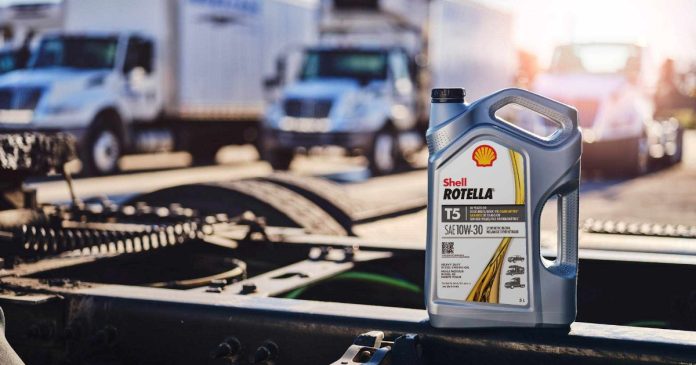
Synthetic blend oils, such as Shell Rotella T5, offer a middle ground between conventional and full synthetic oils. They provide enhanced protection and fuel economy, making them suitable for vehicle fleets operating over wide ambient temperature ranges and for those adhering to most OEM recommendations. These blends combine the best of both oil types to suit diverse operating environments.

Check this out on the Shell Rotella website.

Read More : 

Spring Truck Maintenance: A Seasonal Refresh for Heavy-Duty Trucks

Cargo Theft: The Invisible Threat Straining America’s Supply Chain

0
Cargo theft is on the rise as well-organized criminal networks increasingly target the U.S. supply chain. According to a six-month investigation by CNBC, these groups are hitting trucks, warehouses, and rail cars across the country. In 2024, nearly 3,800 thefts were reported—a 26% increase over the previous year.

Cargo theft is on the rise as well-organized criminal networks increasingly target the U.S. supply chain. According to a six-month investigation by CNBC, these groups are hitting trucks, warehouses, and rail cars across the country.

In 2024, nearly 3,800 thefts were reported—a 26% increase over the previous year. Experts estimate that annual losses may approach $1 billion, though officially reported damages hover around $455 million.

A Shift Toward Strategic Cargo Theft

The threat is no longer limited to physical heists. Criminals are now turning to “strategic theft,” using fake documents and impersonating legitimate carriers to fraudulently divert entire truckloads. This form of theft accounted for a third of all cargo thefts in 2024, up from just 8% in 2020. These schemes often originate overseas and exploit vulnerabilities in logistics technology, making them difficult to trace and stop.

The consequences for businesses are substantial. Companies such as Lacoste, Meta, and Lululemon have seen disruptions in their supply chains, leading to delivery delays, product shortages, and unmet customer demand. Barry Conlon, a transportation security expert, points out that thieves typically target perishable goods, consumer products, and electronics—commodities that are hard to track once stolen and easy to resell or destroy.

A Challenge to Catch the Criminals

Investigating these crimes is complicated, especially when fraudsters operate from abroad. Like identity theft, there is often no trail to follow. According to Jordan Graft, CEO of cybersecurity firm Highway, his company blocked over 914,000 fraud attempts last year—most originating from six countries: India, Mexico, Moldova, Pakistan, Serbia, and Uzbekistan. Many logistics companies point to the limited resources of the Federal Motor Carrier Safety Administration (FMCSA), which struggles to combat such sophisticated cybercrime.

To respond, companies are investing heavily in prevention. TQL, one of the largest freight brokers in the U.S., has spent $4 million on fraud detection technologies. DAT Freight and Analytics employs a 25-person team dedicated to monitoring suspicious activity on its platform. Highway also tracks suspicious changes to carrier profiles in real-time. Still, as tactics evolve, staying ahead of the fraudsters becomes increasingly complex.

Policymakers Step In

The severity of the situation has prompted legislative action. A bipartisan bill, the Combating Organized Retail Crime Act, would create a national coordination center within the Department of Homeland Security to combat cargo theft. Another proposal, the Household Goods Shipping Consumer Protection Act, would grant the FMCSA greater authority to impose civil penalties and tighten regulations on fraudsters. Until these measures are passed, shippers, brokers, and carriers must remain on high alert.

Canada Facing a Similar Surge in Cargo Theft

The cargo theft crisis is not limited to the United States. In Canada, Ontario accounted for 85% of reported cargo theft incidents in 2024. According to Truck News, electronics made up 31% of stolen cargo, followed by construction materials and auto parts (17% each), food and beverages (7%), and tobacco (7%). High-risk areas include unsecured parking lots, truck stops, and distribution centers.

Canada has also seen a rise in strategic theft, mirroring trends in the U.S. Criminals are using false identities, fraudulent paperwork, and even stolen trucks to gain unauthorized access to freight. A striking example occurred at Toronto’s Pearson Airport in April 2023, when thieves used falsified documents to steal over $20 million in gold and currency. In Quebec, there have been reports of individuals attempting to access secure transport yards with fake IDs or paperwork—further evidence that the threat extends nationwide.

This North American trend highlights the urgent need for enhanced security practices across the industry. Transport and logistics companies must adopt advanced tracking technologies, improve verification procedures, and provide robust training for staff and drivers to stay one step ahead of organized crime.

Read More : 

No Patrolling by Contrôle Routier Québec’s Agents on Highways Until 2026?
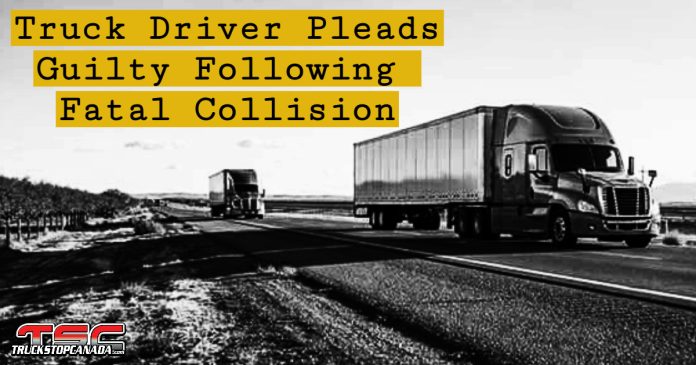
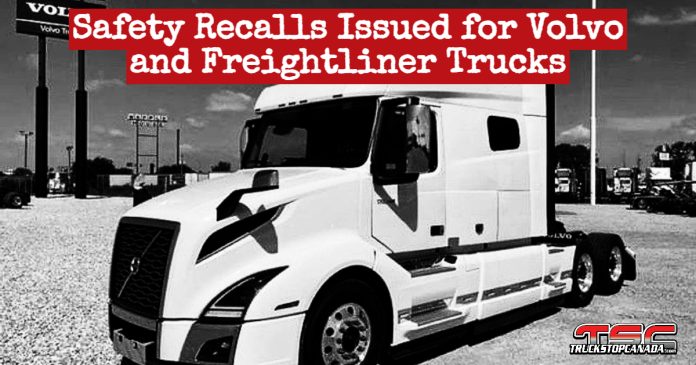
Safety Recalls Issued for Volvo and Freightliner Trucks

0
Volvo Trucks and Daimler Truck North America have recently issued safety recalls on Transport Canada’s website, affecting specific units in their respective fleets.

Volvo Trucks and Daimler Truck North America have recently issued safety recall notices on Transport Canada’s website, affecting specific units in their respective fleets.

These recalls aim to address defects that could compromise safety or regulatory compliance. Below is a summary of the affected models and the specific issues that led to the recalls.

VOLVO VN 2025

Transport Canada Recall # 2025-214
Manufacturer Recall Number RVXX2504

Issue:
On certain trucks, the turbo idler gear bracket fasteners may not have been tightened properly. As a result, the turbo could fail and cause the engine to stall. If this happens, there could be a loss of power to the wheels.

Safety Risk:
A loss of power to the wheels could increase the risk of a crash.

Corrective Actions:
Volvo will notify owners by mail and advise you to take your truck to a dealership to inspect and, if necessary, replace the turbo.

VOLVO VN 2023, 2024, 2025

Transport Canada Recall # 2025-175
Manufacturer Recall Number RVXX2503

Issue:
On certain vehicles, a software problem could cause the backlight for the hazard light switch not to work, or to turn off while driving. As a result, you may not be able to see the switch in low light conditions.

Safety Risk:
A hazard light switch that is difficult to see could increase the risk of a crash.

Corrective Actions:
Volvo Trucks will notify owners by mail and advise you to take your truck to a dealership to update the vehicle master control unit software.

FREIGHTLINER BUSINESS CLASS M2 2024, FREIGHTLINER CASCADIA 2024, 2025, 2026

Transport Canada Recall # 2025-040
Manufacturer Recall Number F1017

Issue:
On certain electric trucks, the electric vehicle power distribution module (EVDM) may not have been assembled properly. As a result, the connector could separate from the module. If this happens, there could be a loss of power to the wheels. Additionally, certain driver assist functions may not work.

Note: This recall only affects certain eCascadia and eM2 models.

Safety Risk:
A loss of power to the wheels could increase the risk of a crash.

Corrective Actions:
Daimler Truck North America (DTNA) will notify owners by mail and advise you to take your truck to a DTNA authorized service facility to inspect and, if necessary, reinforce or replace the electric vehicle power distribution module.

Read More : 

Volvo Trucks Recall on Nearly 20,000 Vehicles

Canadian Trucking Alliance Urges Ottawa to Better Regulate the Hiring of Foreign Students and Temporary Workers

0
Canadian Trucking Alliance Urges Ottawa to Better Regulate the Hiring of Foreign Students and Temporary Workers

Following Prime Minister Mark Carney’s first post-election press conference, during which he announced plans to cap the number of international students and temporary foreign workers, the Canadian Trucking Alliance (CTA) is calling for a more comprehensive reform of immigration policies.

The CTA insists that future federal decisions should not rely solely on numerical limits. According to the organization, more attention must be paid to how newcomers are integrated into the labor market, the industries in which they are employed, and, most importantly, the practices of the employers who hire them.

The Alliance warns of troubling trends observed in parts of the trucking sector, where labor laws and minimum standards are not always upheld—as evidenced by ongoing abuses under the so-called Driver Inc. scheme.

The CTA’s president reiterates that immigration remains a vital solution to Canada’s truck driver shortage. However, this solution must not come at the expense of workers’ rights. The organization reports that cases of abuse—and even forced labor—continue to surface in the industry, and that urgent action is needed to put a stop to them.

A Program for Recognized Employers?

To address these concerns, the CTA is urging the federal government to work with the trucking industry to establish a mandatory recognized employer program.

Such a program would match labor needs with trucking companies that follow employment laws and ethical standards. It would also help protect foreign workers from exploitation by certain immigration consultants, driving schools, and fleet owners who take advantage of loopholes in a flawed immigration system.

The Alliance also references recent investigative reports that have exposed cases of exploitation involving foreign workers in the transport industry. In their view, these reports reflect just the tip of the iceberg in a much broader issue—both in Canada and globally.

The CTA plans to intensify its advocacy with both the Canadian and U.S. governments to crack down on abusive practices across the trucking supply chain. The ultimate goal: to clean up the system, protect workers, and restore public trust in the industry.

Read More : 

The Quebec Association of Artisan Truckers (ANCAI) Plan Major Protest on May 14

Spring Truck Maintenance: A Seasonal Refresh for Heavy-Duty Trucks

0
Spring Truck Maintenance: A Seasonal Refresh for Heavy-Duty Trucks, with Shell Rotella!

Spring Truck Maintenance: A Seasonal Refresh for Heavy-Duty Trucks | As winter gives way to spring, now is the perfect time to inspect and maintain your truck to ensure it’s in top condition for the warmer months ahead. Harsh winter weather can take a toll on various components, so a thorough seasonal checkup can help prevent costly repairs and keep your truck running efficiently.

A good place to start is by giving your truck a complete wash, including the undercarriage, to remove dirt and road salt that can lead to corrosion. Pay special attention to your lights—corroded contacts are common after winter exposure, so check that all lights function properly.

Don’t overlook your windshield wiper blades, which can wear out quickly during winter. Replacing them with heavy-duty blades designed for trucks will help maintain visibility in spring showers. Also, inspect your tires for proper inflation and tread wear. Well-maintained tires not only extend tire life but also contribute to fuel efficiency.

On the steer axle, check for even tire wear across the tread. Uneven wear could indicate an alignment issue or a problem with the suspension that should be addressed promptly.

A clean air filter is essential for optimal engine performance and fuel economy, so inspect and replace it if necessary. Additionally, check all fluid levels and ensure they are at the proper levels. Carrying a spare fuel filter is a smart precaution in case a replacement is needed on the road.

Regular oil changes are key to keeping your engine in peak condition. Shell Rotella® offers a full range of synthetic and synthetic blend heavy-duty engine oils that protect both modern low-emission and older diesel engines. Shell ROTELLA® T5 10W-30 Synthetic Blend and Shell Rotella® T6 10W-30 Full Synthetic help improve fuel economy compared to 15W-40 engine oil. Both oils offer enhanced warm and cold-start performance.

Remember to clean debris from the radiator and air intakes to prevent overheating. Check your cooling system to ensure the proper concentration of coolant; maintaining the correct freeze point is crucial year-round. Consider switching to an extended-life coolant like Shell Rotella ELC NF which can help reduce maintenance needs and enhance cooling system performance.

Spring maintenance is essential for keeping your truck operating at its best. By taking the time to inspect and service key components, you’ll help ensure smooth, trouble-free driving.

Check this out on the Shell Rotella website.

In the realm of engine oils, the distinctions between synthetic and conventional types are key to optimizing engine performance, here's a promo.

Read More : 

Understanding Engine Oils: Synthetic vs. Conventional

Editors Pick