
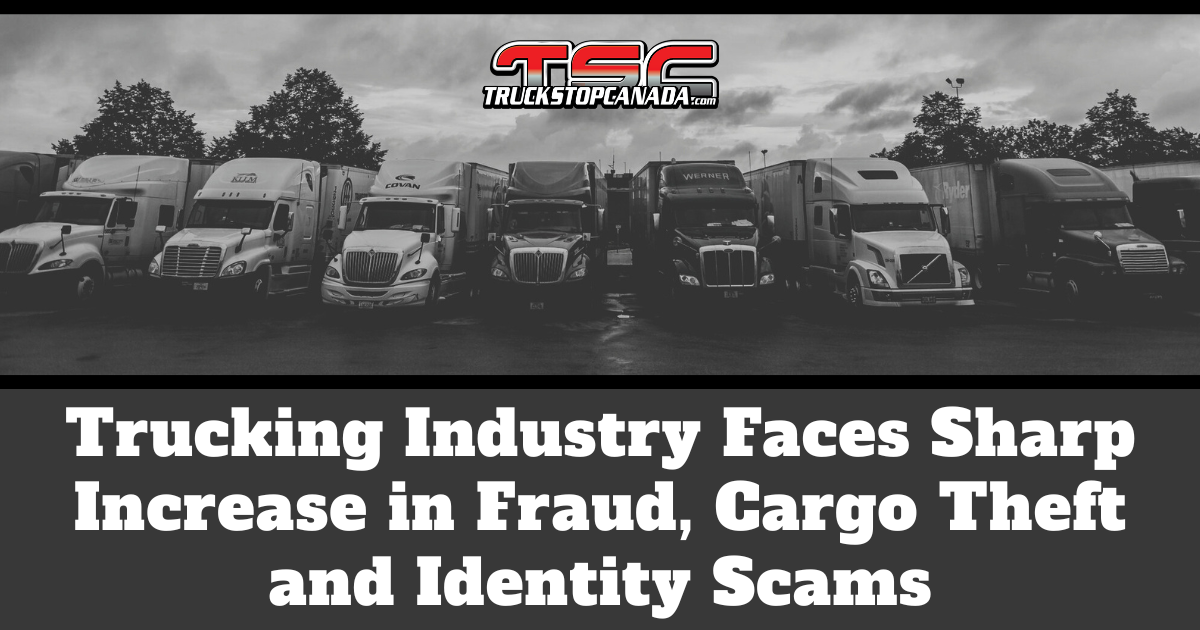
Cargo theft in the trucking industry is becoming increasingly complex, according to data compiled by law-enforcement agencies and transportation authorities.
Far from being limited to traditional trailer break-ins in parking lots or unsecured yards, recent investigations show a rapid rise in equipment theft, logistics fraud, fake carriers, and double brokering schemes.
This evolution is creating major blind spots for shippers, who struggle to track the actual carrier responsible for their freight once it leaves the warehouse—particularly in Ontario’s 905 region, long recognized as a hotspot for cargo-related crime in North America.
Statistics indicate that theft of tractors, trailers, and freight continues to rise simultaneously. What concerns investigators most is not just the value of the stolen equipment. It is the growing sophistication of the operations: carrier identity theft, forged documents, fake MC numbers, fraudulent brokers, and shell companies disguised as legitimate carriers. These schemes closely mimic real transportation processes, giving shippers a false sense of security until the load simply disappears from the system.
In this environment, double brokering adds yet another layer of confusion. A shipper may believe they have vetted a carrier properly, only for that carrier to hand off the freight to another operator without authorization or disclosure. When fraud is involved, the shipper no longer knows who actually possesses the load—or when control was lost. Investigations have uncovered freight being passed between multiple unknown intermediaries before ultimately being routed into criminal networks, making the paper trail nearly impossible to reconstruct.
Peel Regional Police investigations clearly show how dangerous this lack of visibility can become. Criminal groups have succeeded in picking up trailers by posing as legitimate carriers and presenting paperwork that appears entirely authentic. They use identities stolen from real carriers or provide documents that are perfectly forged. With these tactics, they are able to pull trailers—sometimes fully loaded—right out of trucking yards without anyone realizing a fraud is taking place. In several operations, police recovered millions of dollars in stolen cargo and equipment, confirming that organized crime now relies heavily on digital logistics manipulation and administrative loopholes rather than physical force.
For trucking companies and their customers, the consequences show up quickly: higher insurance premiums, longer verification steps, and additional procedures to confirm the true identity of the carrier picking up a load. Several industry associations now recommend using digital authentication tools and being extremely cautious with unknown intermediaries in order to limit the risks tied to double brokering and freight fraud. Double brokering is inherently risky, as it can introduce rogue carriers who abuse the “Driver Inc.” model, creating major liability issues in the event of an accident, increasing insurance gaps, and exposing shippers to carriers who may not meet proper training or maintenance standards.







Great article, Sophie. The challenge with all the current technology is that it provides data – information that requires intervention by a human who may or may not react or react in time to do anything to change the outcome.
After 40 years in trucking and frustrated with these passive solutions, I joined Level5Fleet. We have developed a solution that allows trailers to lock their own doors when they leave the yard or lock their own brakes until an authorized user is permitted to unlock them.
By making the trailers smart, we can eliminate trailer and cargo theft.