
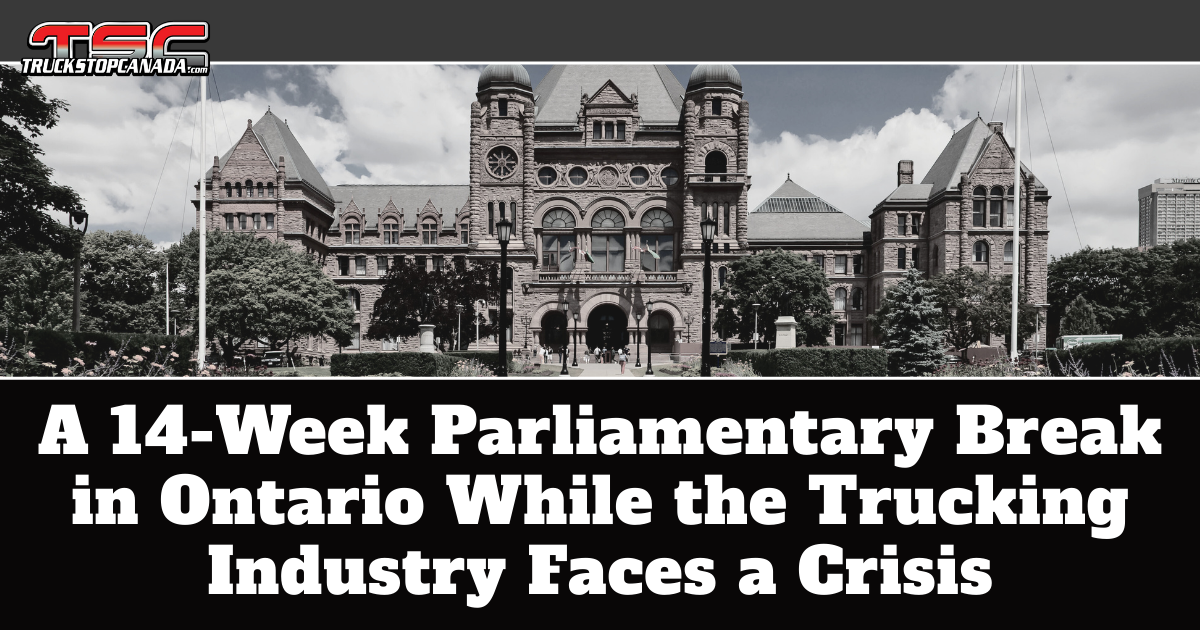
Ontario’s legislature is preparing to take a 14-week winter recess, less than two months after returning from a 19-week summer parliamentary break.
The announcement comes as concerns continue to mount over the province’s ability to address urgent and ongoing issues affecting public safety and key economic sectors.
According to Government House Leader Steve Clark, the Legislative Assembly at Queen’s Park will not resume sitting until March 23. Opposition parties have criticized the length of the break, arguing that extended interruptions reduce the legislature’s capacity to debate pressing matters and hold the government accountable at a time when multiple crises remain unresolved.
Under normal circumstances, Ontario MPPs return to Queen’s Park in mid-February, following Family Day. Steve Clark defended the schedule by stating that parliamentary work continues outside the chamber, through constituency duties and the implementation of legislation already passed. Still, in 2025, the Ontario legislature will have sat for only 51 days — a figure the opposition says is insufficient to properly address complex issues tied to public safety and economic stability.
This prolonged pause comes as Ontario’s trucking and road transportation sector faces mounting challenges. For months, groups such as the Caledon Community Road Safety Advocacy Group (CCRSA) have been raising alarms over the growing presence of the Driver Inc. scheme, illegal trucking yards, unregulated training operations, and the increasing number of drivers operating on provincial roads without adequate training or oversight.
“How are we going to get anything done? How much time do these people get holiday? So how are we going to get these illegal yards shut down?” according to Carmela Anzelmo-Palkowski of CCRSA.
For CCRSA members, the issues extend well beyond regulatory non-compliance. They describe a pattern of negligence with potentially deadly consequences, affecting both road users and the communities where these operations are concentrated. In Caledon, located on the edge of Brampton — often identified as a hotspot for the Driver Inc. phenomenon — these concerns are especially pronounced.
The Ontario Trucking Association (OTA) has also acknowledged on multiple occasions that the industry is facing serious challenges, particularly in areas related to driver training, regulatory compliance and road safety. These systemic issues continue to place strain on an industry that remains essential to Ontario’s economy.
In Northern Ontario, the situation takes on an even more severe dimension. Highways 11 and 17, frequently cited among the most dangerous routes in the province — and even nationally — are critical corridors for freight movement and for the survival of remote communities. As winter conditions set in, these already deadly highways become even more unpredictable. For many in the transportation sector, the issue is no longer just infrastructure or weather, but the cumulative impact of long-standing failures that place human lives at unacceptable risk.
Against this backdrop, transportation stakeholders are increasingly concerned about the disconnect between the severity of on-the-ground conditions and the slowdown of legislative activity at Queen’s Park. While trucking remains vital to Ontario’s and Canada’s economies and to regional supply chains, the combination of unsafe practices and harsh winter conditions continues to heighten safety concerns.
For truck drivers and the general public alike, winter marks the beginning of a high-risk period — one where the structural problems facing Ontario’s transportation system remain largely unresolved.